This all started with one idea that the environment in which you make a record ultimately influences the end result. Not just the studio, but the people and the history.When I listened to our records, I remember everything about the experience, its like I hear memories. I feel like if everyone knew more about the people and the places these records made, they would feel more connected to it.

SOUR Unveils Pur: A Residential Recording Studio in Cunda, Turkey That Reimagines Music Production as Cultural Infrastructure.
A residential recording studio that bridges vernacular craft and world-class acoustics, designed through co-creation with international and local musicians.
Cunda, Turkey — SOUR has completed Pur, a residential recording studio on the Aegean island of Cunda that embodies a simple but urgent belief: music brings us together; it celebrates diversity yet enables oneness, a model we need to benchmark more in the world. Pur is infrastructure for connection —a place where the act of making music becomes inseparable from the act of building community across cultures and contexts.

An Experiment in Dual Alignment
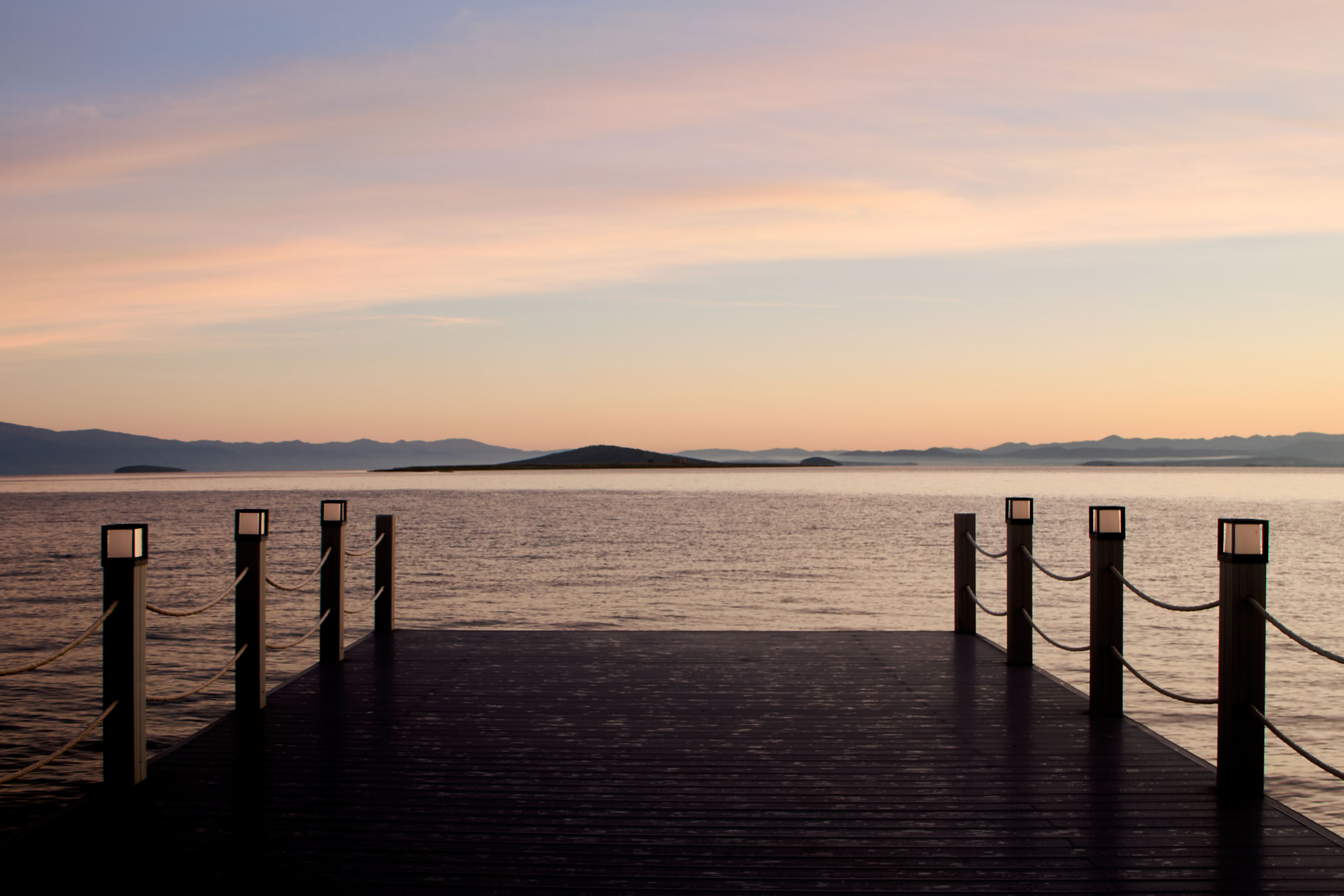
The project addresses a fundamental question: how can a building honor the elemental character of its place—sea, olive trees, wind and birds—while delivering the acoustic precision required for world-class music production? Pur is an experiment in dual alignment: respecting and blending in with the local, while enabling a new destination with state-of-the-art technology. It demonstrates that the global and the local need not compete but can amplify one another.
Pur is an experiment in dual alignment: respecting and blending in with the local, while enabling a new destination with state-of-the-art technology. It demonstrates that the global and the local need not compete but can amplify one another.
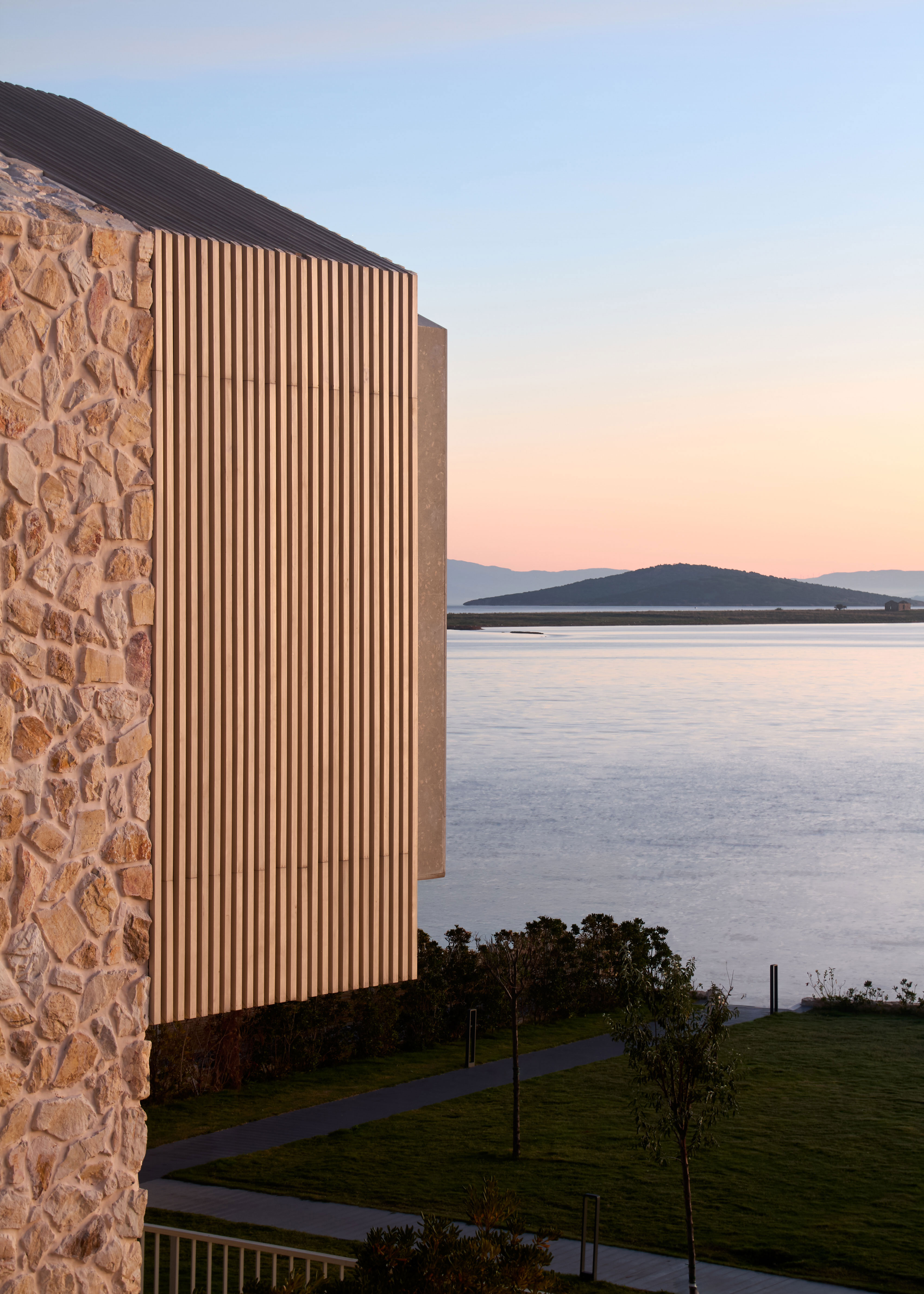
Pur turns this tension into a spatial journey. The building is conceived as a simple, two-story masonry and timber structure that respects Cunda’s architectural heritage while refining its tectonics for contemporary use.
Inside, the experience shifts. The interiors unfold as a sequence of soundscapes - varied heights, widths, depths, and carefully calibrated surfaces of reflection and absorption - so each space offers a distinct recording character that is inseparable from its shape, volume and material and audible to an educated ear.
A GFRC shell expresses this transformation in a single gesture: a threshold that carries users from the vernacular calm of Cunda into a highly tuned recording environment, as if passing through a “wormhole” of soundscapes, mirroring how music itself moves across time, cultures, and people.


A naturally lit Cave
This transformation guides users from the ground floor down to the Musician’s Lounge at the -10.00 m level. The descent evokes a subterranean, cave-like atmosphere suited to music production, while natural light remains a defining element throughout.
Despite the level change, the lounge is visually connected to the restaurant and terraces above, keeping it open and light. This clear link and smooth spatial flow preserve a sense of intimacy and comfort—a true home-away-from-home experience, never the feeling of being “in a basement.”
The recording studio including live rooms, control room, vocal and percussion rooms, reverb chambers, editing / montage suites, mastering suite and dolby atmos theater, is built as a box-in-box system for acoustic isolation and performance. The main live room is scaled to accommodate up to a 75-piece orchestra for large productions. Sliding partitions and rotating, adjustable height ceiling panels allow the live room to be tuned like instruments, expanding the range of acoustic possibilities.
A double-height restaurant anchors the social life of Pur, linking outdoor courts and lounges to terraces and the sea shore. Hospitality and high-performance sound coexist without compromise.


A Process of Co-creation
The design reflects principles co-created with international and local musicians through SOUR’s participatory methods and co-design framework: access to nature, being “glocal,” spaces of active creativity, and places of refuge. These aren’t abstract ideals but lived needs that shaped every spatial decision.
The result is a place for cultural production where the architecture itself is evidence of collaboration—shaped by the voices of those who will inhabit and animate it.